when launching or expanding services in the korean market, comparing the cost and operational differences between local computer rooms and cloud server korean nodes is the key to decision-making. this article conducts a systematic analysis focusing on cost structure, bandwidth and traffic, operation and support, availability, compliance and geographical advantages. it aims to provide practical reference for technology and operation teams who want to deploy or optimize cross-border architecture in south korea to achieve a balance between performance, compliance and budget.
cost composition comparison
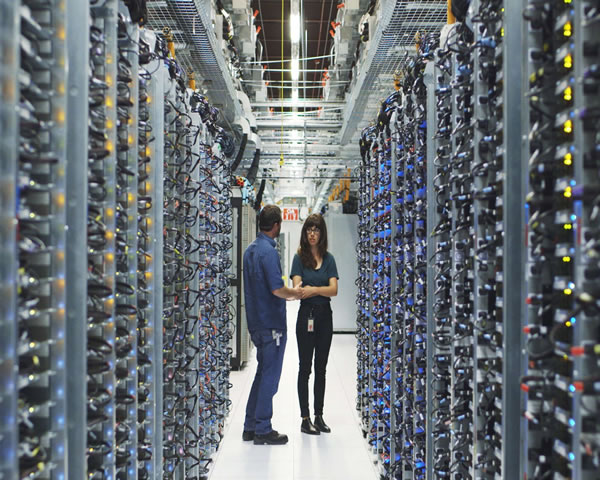
in terms of cost structure, local computer rooms and cloud server korean nodes have different priorities. local computer rooms tend to focus on initial capital expenditures, covering costs such as cabinets, network access, electricity and physical locations; cloud servers focus on operating expenses, with higher proportions of pay-as-you-go, instance and storage pricing, and traffic billing. the long-term total cost of both is affected by load stability, expansion frequency, and operation and maintenance efficiency, and needs to be evaluated based on business growth expectations and cost models.
initial investment and long-term costs
when choosing a local computer room, the initial investment usually includes equipment purchase and deployment, computer room rental or self-construction costs, which are one-time and amortized with depreciation. korean cloud server nodes are mainly based on subscription or pay-as-you-go billing. the initial threshold is low, but long-term use may accumulate high operating expenses. asset depreciation, capital recovery cycle and long-term elastic demand should be considered when measuring to determine a more appropriate cost structure.
bandwidth and traffic cost differences
bandwidth and traffic are significant factors that are often overlooked in korean node comparisons. using a local computer room can directly negotiate with the local bandwidth provider to optimize the local e2e connection; cloud servers often have outbound traffic billing or cross-regional transmission fees. for traffic-intensive services, bandwidth pricing, peak traffic, and cdn should be considered together to avoid a surge in operating costs due to traffic patterns.
the difference between operation and maintenance
in daily operations, the local computer room needs to undertake tasks such as equipment maintenance, hardware replacement, and on-site fault handling, which requires enterprises to have certain operation and maintenance teams and spare parts management capabilities. cloud server korean nodes outsource a large amount of operation and maintenance work to cloud service providers, providing automated operation and maintenance tools and platform capabilities, but it also brings trade-offs between platform dependence and controllability. the choice depends on the company's tolerance for control and outsourcing.
human and technical support
local computer rooms require localized technicians, network engineers and on-site support to handle physical failures faster and meet specific hardware requirements; while cloud server korean nodes reduce the need for on-site personnel through hosting services and api-based management, and support remote automated operation and maintenance and standardized fault recovery. the assessment should combine the availability of local talent with stringent requirements for response times.
availability and scalability
in terms of availability, cloud server korean nodes usually provide multiple availability zones, rapid elastic expansion, and built-in backup and disaster recovery options, which are suitable for scenarios that require rapid expansion or have significant load fluctuations. relatively speaking, the local computer room invests more in redundant design and cross-site disaster recovery but can achieve more fine-grained control. for services with low latency, localized access and strict sla, the difference in redundancy and expansion mechanisms should be evaluated.
compliance and geographical advantages
compliance and geographical location are important factors affecting node selection. deployed in korean nodes, whether it is a local computer room or a cloud server, it can significantly reduce user latency and improve local search and service experience. in view of data residency, privacy and regulatory requirements, some businesses may prefer locally controllable physical computer rooms; cloud servers can provide compliance certification and audit capabilities in terms of compliance, but it is necessary to confirm that the cloud provider's data processing and geographical coverage meet regulatory requirements.
summary and suggestions
when comparing the cost and operational differences between local computer rooms and cloud server korean nodes, the starting point should be business characteristics: if you pursue low initial investment, rapid deployment, and elastic expansion, cloud server korean nodes have more advantages; if you emphasize complete control of hardware and network, long-term stable load, or specific compliance requirements, local computer rooms may be more suitable. it is recommended to carry out detailed cost modeling, traffic and performance testing, and consider hybrid deployment or layered architecture as a compromise solution, first conduct small-scale pilot verification and then promote full deployment.